
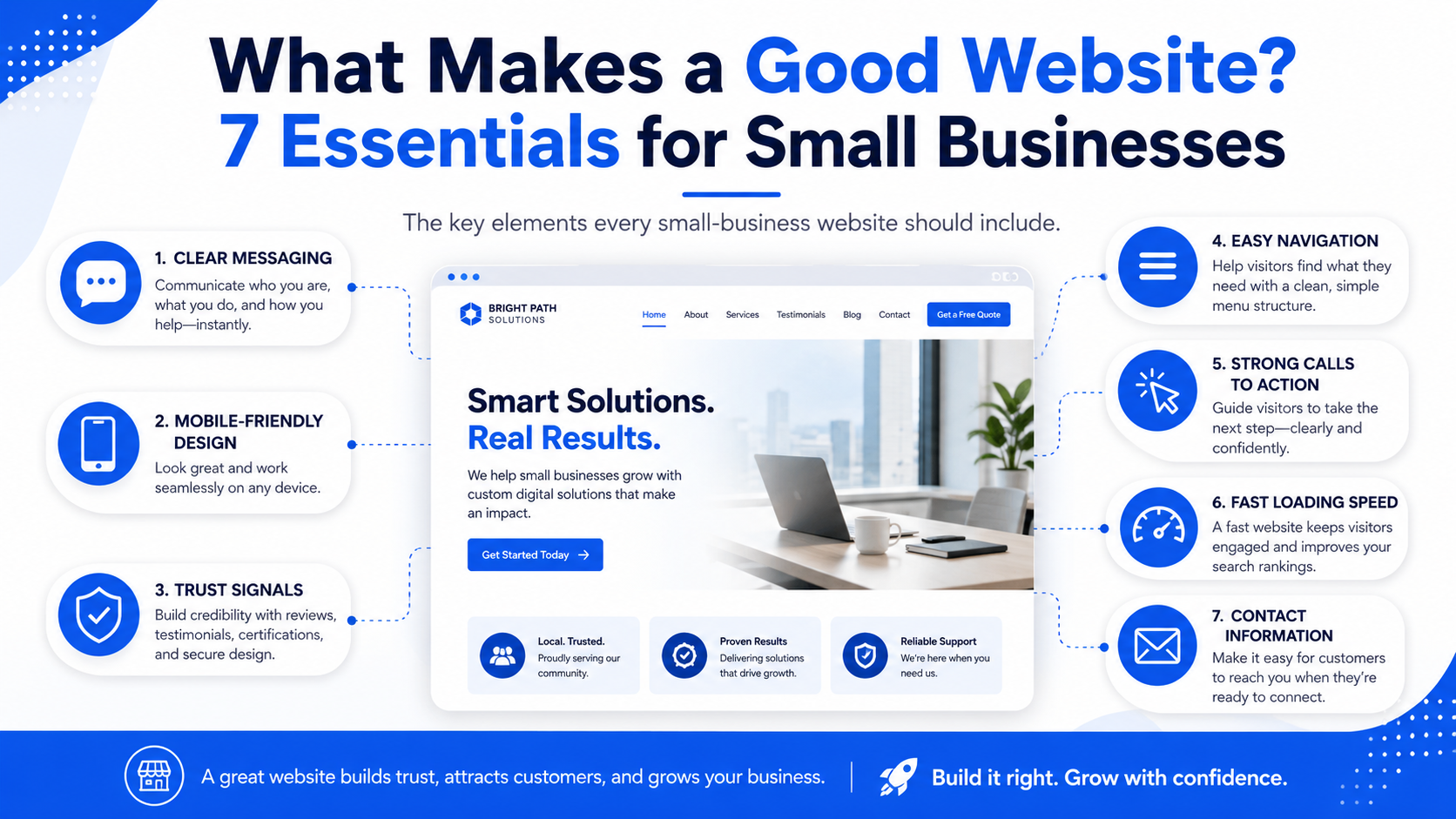

Plenty of small businesses have a website. Far fewer have a good one. There’s a real difference between a site that technically exists and one that actually builds trust, ranks in search, and turns visitors into customers.
Here are the 7 essentials we look for on every project — the difference between a website that just sits there and one that works for your business.
1. Clear, Immediate Messaging
Visitors decide whether to stay or leave within seconds. Your homepage needs to answer three questions instantly: Who are you? What do you do? Why should I care? If a first-time visitor has to scroll and hunt to figure out what your business actually offers, you’re losing them before they even get started.
2. Fast Load Times
Every second of load time increases the chance a visitor bounces before the page even finishes loading. Oversized images, bloated plugins, and cluttered code are the most common culprits. A fast, lean site isn’t just a nicety — it’s a ranking factor for search engines too.

3. Mobile-First Design
More than half of web traffic now comes from phones, not desktops. A good website isn’t just “responsive” in a technical sense — it should feel like it was actually designed for a small screen first, with buttons that are easy to tap and text that doesn’t require pinch-zooming.
4. Clear Calls-to-Action
Every page should have an obvious next step: “Book a Consultation,” “Get a Quote,” “Call Now.” Sites that bury their contact information or make visitors dig for a phone number are leaving business on the table. Make it obvious — and make it easy.
5. Real SEO Foundations
A good website is built to be found, not just to look nice. That means proper title tags, meta descriptions, header structure, alt text on images, and content that actually targets the terms your customers are searching for. A beautiful site nobody can find isn’t doing its job.
6. Trust Signals
Testimonials, case studies, certifications, real photos instead of generic stock imagery, an updated copyright year — small details like these tell visitors a business is legitimate and active. Trust signals matter even more for service businesses where the purchase decision carries more weight.
7. Easy Maintenance & Updates
A good website isn’t a one-and-done project — it needs to be easy for you (or your web partner) to update pricing, add new services, and refresh content over time. Sites built on outdated platforms or overly custom code often become expensive and difficult to touch, which means they quietly go stale.
The Bottom Line
A good website isn’t about flashy design — it’s about function. Clear messaging, speed, mobile-friendliness, obvious next steps, real SEO groundwork, credibility signals, and long-term maintainability. Miss a few of these, and even an attractive site will underperform.
Curious how your current site stacks up against these 7 essentials? Sokie Digital builds small business websites in Nashville designed to check every one of these boxes. Get a free site review.